Now through October 31, we're waiving application fees for all domestic freshman and transfer applicants!
*Common app code: Central27
Healthy Aging Initiative
Healthy aging initiative programs
 By
2060, the number of older adults in the U.S. is projected to be nearly
100 million, up from 47.8 million today. Aging in place provides
independence and autonomy while
maintaining well-being through caring relationships and access
to
resources. One of the cornerstone resources for aging well is
preventative wellness and fall prevention. Inconsistent
availability of geriatric preventative health care, due to
limited availability, access and affordability of services are
significant challenges – as is a shortage of geriatric
health care
providers. A 2008 survey from the Institute of Medicine
demonstrated that there is inadequate exposure to geriatric
populations during training, and very few healthcare
professionals
develop an interest in the care of older adults. The result is
that
older adults living in rural and semi-urban communities
have limited or no access to vital preventative health care
resources in or close to home.
By
2060, the number of older adults in the U.S. is projected to be nearly
100 million, up from 47.8 million today. Aging in place provides
independence and autonomy while
maintaining well-being through caring relationships and access
to
resources. One of the cornerstone resources for aging well is
preventative wellness and fall prevention. Inconsistent
availability of geriatric preventative health care, due to
limited availability, access and affordability of services are
significant challenges – as is a shortage of geriatric
health care
providers. A 2008 survey from the Institute of Medicine
demonstrated that there is inadequate exposure to geriatric
populations during training, and very few healthcare
professionals
develop an interest in the care of older adults. The result is
that
older adults living in rural and semi-urban communities
have limited or no access to vital preventative health care
resources in or close to home.
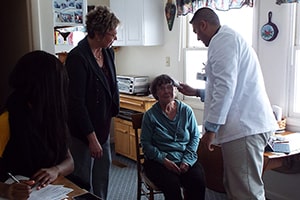
Central Michigan University, with support from Michigan Health Endowment Fund and Region VII Area Agency on Aging, is building the Healthy Aging Initiative. CMU, in partnership with the local County Commissions on Aging (Isabella, Clare, and Gratiot) and other stakeholders in the community will develop programs to improve older adult wellness, reduce the risk of falls and provide home-based replicable low-cost solutions for healthy aging. The initiative leverages CMU’s academic strengths to bring “wellness” and fall prevention programs to the older adults in the community.
Project INCLUDE: Addressing Social Isolation and Loneliness
Older adults live longer, happier, and healthier lives when they aren’t lonely or isolated. When you INCLUDE health professionals and older adults, you increase social connectivity, well-being, and longevity! Project INCLUDE’s goal is to establish a sustainable, collaborative care model for older adults, grounded in open conversation about loneliness, to overcome negative emotional triggers that create isolation. INCLUDE is a joint effort between Covenant HealthCare College of Medicine at Central Michigan University and the Presbyterian Villages of Michigan (PVM) with support from the Michigan Health Endowment Fund. It serves older adults (age 60+) and their caregivers living independently in central Michigan and older adults living in PVM Villages across Michigan. INCLUDE will benefit both current and future community-based health care professionals including students and community-based health care providers. Improve Social Connection to Reduce Loneliness in the Elderly (INCLUDE)’s collaborative care model employs strategies to:
- Identify older adults at risk for, or experiencing, loneliness and isolation.
- Network community-based organizations (Central Michigan University, senior living communities, mental health agencies) to help older adults get and stay mentally healthy.
- Help future health care professionals learn Communication skills and principles of social prescribing to help reduce social isolation and encourage healthy habits to manage comorbidities.
- Assist health care professionals in Learning signs and treatment for social isolation in older adults.
- Support current and future health care professionals, mental health agencies, seniors’ peers, and senior housing social support staff in Undertaking effective psychosocial methods to alleviate social isolation.
- Decrease loneliness and isolation in older adults.
- Enhance well-being in older adults.
INCLUDE’s collaborative care model employs strategies to identify older adults at risk for or experiencing loneliness and isolation, engages community-based organizations, and educates community-based health care professionals to prevent and alleviate isolation and loneliness and enhance well-being in older adults. If you are an older adult in central Michigan or a PVM village, you can fill out our survey at Project INCLUDE Online Survey. It will help us understand both where social isolation and loneliness is and how to address it. Thank you! If you want to get involved or have questions, please reach out to fallprevention@cmich.edu or call 989-774-1350.
Fall prevention, exercise program
 Central
Michigan University is providing a unique program called the Fall
Prevention
Otago-Exercise Program as part of our Healthy Aging
initiative. This opportunity provides students’ exposure to the
community and develops skills to assist older adult patients. This
program is supported by Region VII Area
Agency on Aging grant. Participation in the program
is voluntary and is offered at no cost to participants.
Central
Michigan University is providing a unique program called the Fall
Prevention
Otago-Exercise Program as part of our Healthy Aging
initiative. This opportunity provides students’ exposure to the
community and develops skills to assist older adult patients. This
program is supported by Region VII Area
Agency on Aging grant. Participation in the program
is voluntary and is offered at no cost to participants.
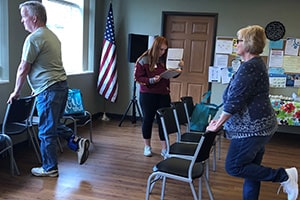
The free fall prevention exercise program provides
- Fall risk screening by CMU health professionals.
- An individualized exercise program developed specifically for you.
- The opportunity to receive training and become a peer-coach for others.
- The ability to volunteer and support the training of health professional students.
For older adults assessed with mild or no-risk of fall, the Matter of Balance exercise program provided by the local Commission on Aging is recommended. Participants who follow a regular exercise regimen will be advised to continue. A follow-up visit will be scheduled in approximately one year’s time.
For older adults assessed at moderate risk of fall, we offer the Otago exercise program, designed to improve balance and reduce the risk of falling.
The program is an 8-week exercise program tailored to the individual and can be followed at home or in a group at the local sites in all three counties. A follow-up assessment will be conducted based on your response to, and the requirements of the program.
Participants register now
 Please complete the attached questionnaire to
register for the program. You may also print and mail the form to the
address provided. You may also call the Healthy Aging voicemail to
register or
ask questions at 989-774-1350.
Please complete the attached questionnaire to
register for the program. You may also print and mail the form to the
address provided. You may also call the Healthy Aging voicemail to
register or
ask questions at 989-774-1350.
Students volunteer now
 Improve
your patient care skills, gain experience working with a
team of health providers, and help older adult
participants decrease their risk of falls. Student volunteers work
directly with participants in collaboration with a physical therapist
and earn credit for volunteer
Improve
your patient care skills, gain experience working with a
team of health providers, and help older adult
participants decrease their risk of falls. Student volunteers work
directly with participants in collaboration with a physical therapist
and earn credit for volunteer
Supported by a federal grant through Region VII-Area Agency on Aging.